


The people counter uses infrared/camera devices to count the number, direction, density, and duration of people flow, and then analyzes the obtained data to provide data basis for decision-making in retail stores (using People Counter) and the public transportation industry (using Passenger Counter). Depending on the technology, we have Infrared People Counter, 2D People Counting Camera, 3D People Counting Camera, and AI People Counting Camera, which can also enable our AI People Counter to learn and accurately count other objects (such as cattle, sheep, vehicles, etc.). According to different locations and budgets, different devices should be selected for personnel statistics. Please provide us with detailed explanations and we will help select the most suitable People Counter.
We provide API for all of our People counter, allowing customers to interface with their own systems and directly or indirectly utilize the data collected by our People counting Camea for their use.we have products available for single store use, chain store use, in non network environments, and online use.
How to Choose the Right People Counter Technology
Different people counting technologies are designed for different entrance layouts, traffic conditions and data requirements. We offer infrared, 2D, 3D and AI-based people counting solutions to help retail operators and transportation providers select suitable counting equipment.
Infrared Beam Counting
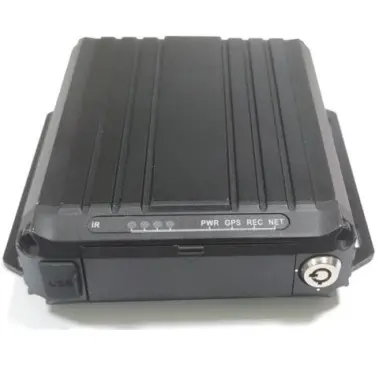
An infrared people counter uses a transmitter and receiver positioned opposite each other. When someone passes through the detection area, the interruption and sequence of infrared signals are used to record movement and determine the counting direction.
This technology is suitable for defined entrance passages where a straightforward in-and-out counting method is required. Our HPC005 series supports transmitter and receiver installation on opposite sides of an entrance, with product information specifying entrance widths of 1–40 meters.
2D People Counting Camera
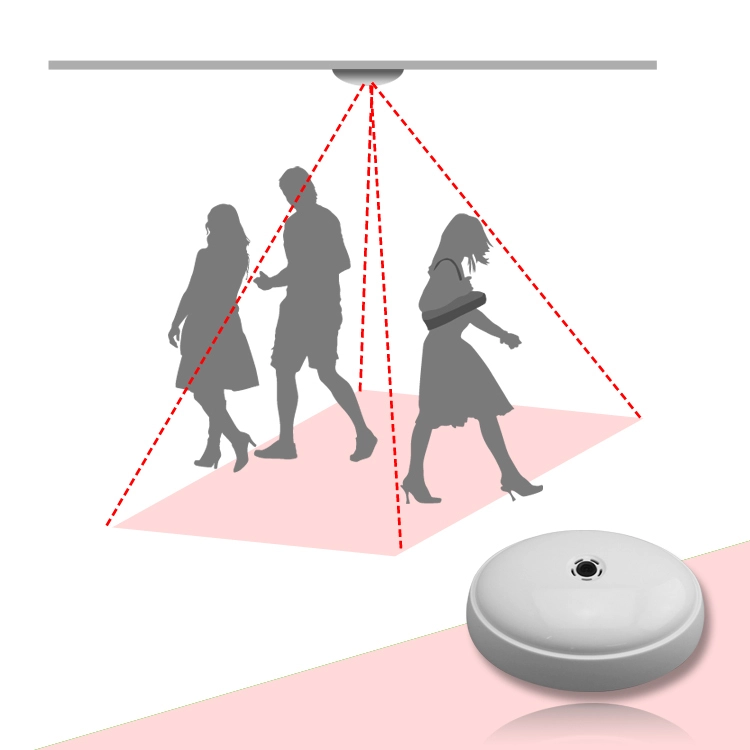
A 2D people counting camera uses overhead image analysis to identify and count people moving through a defined detection area. It can record bidirectional traffic and provide more information than a simple beam-interruption counter.
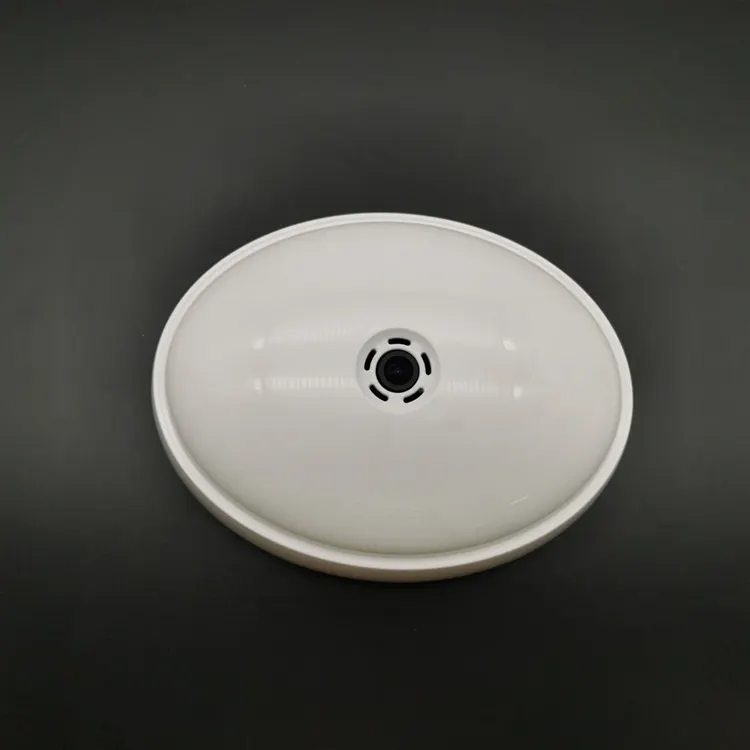
Our HPC008 is a 2D people counting camera designed for ceiling installation and an approximately 2-meter-wide entrance. It supports Wi-Fi and Ethernet connectivity, real-time data uploads and people flow reporting.
3D Stereo Vision People Counting
3D stereo vision uses two camera viewpoints to obtain depth information and track the movement of people. It is particularly useful when a counting application requires more detailed target recognition, including situations where passengers move close together or carry luggage.
Highlight's HPCM002 bus passenger counter uses two independent cameras and a 3D counting approach to identify passengers boarding and alighting. Its product documentation also describes filtering errors caused by objects such as hats and suitcases.
AI People Counting
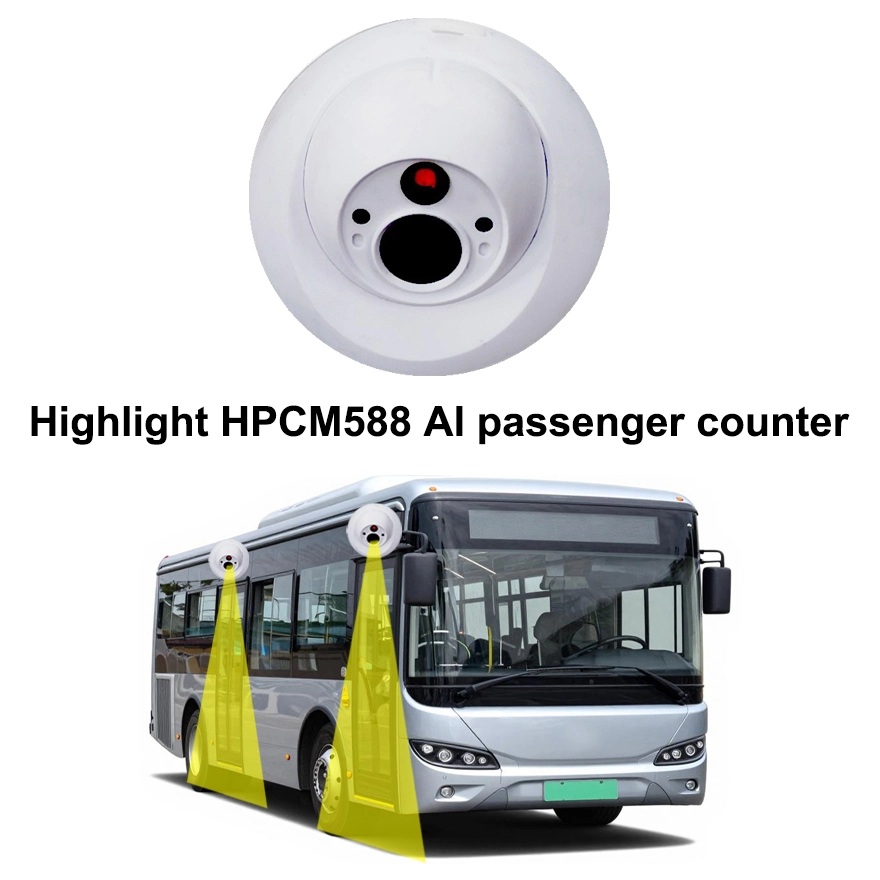
AI people counters use image recognition and trained algorithms to identify and track selected targets. Depending on the device and application, AI-based counting can be used for passenger statistics, crowd management, occupancy monitoring or counting specified objects. Our HPCM588 AI passenger counter uses image analysis and neural network-based deep learning to count passengers boarding and alighting from buses.
| Technology | Counting Method | Typical Application | Selection Consideration |
|---|---|---|---|
| Infrared | Beam interruption | Retail entrances and defined passages | Entrance width and sensor alignment |
| 2D Camera | Overhead image analysis | Stores and shopping facilities | Entrance coverage and installation height |
| 3D Stereo | Stereo vision and depth analysis | Public transportation and complex passenger flows | Camera positioning and movement patterns |
| AI Counting | AI image recognition and tracking | Passenger statistics and selected object counting applications | Recognition targets and algorithm requirements |
Technology selection should be based on the actual device model, entrance configuration, traffic conditions and required data output. The comparison above describes general technology differences rather than guaranteed performance specifications.
How Retail People Counting Data Supports Store Management
Retail people counters help operators understand how visitors enter, leave and move through physical stores. When footfall data is combined with sales and operational information, it becomes a useful reference for evaluating store performance and planning daily operations.
Measure Entrance Footfall
Entrance footfall is the number of visitors entering a store during a selected period. Comparing entry and exit counts helps retailers understand traffic patterns throughout the day.
Retail operators can use hourly, daily and monthly visitor statistics to identify busy periods, compare different trading days and support staffing arrangements.
Visitor Flow
Compare incoming and outgoing visitors to understand store traffic changes over time.
Occupancy Monitoring
Use available occupancy data to monitor the number of people currently inside a monitored area.
Visit Duration
Review average residence-time information when supported by the selected counting camera and software.
Store Comparison
Compare traffic reports from multiple branches to understand differences in visitor activity.
Connect Footfall Data with Retail Performance
Visitor counts become more useful when they are evaluated alongside sales records. For example, retailers can compare the number of store visitors with completed transactions to calculate a sales conversion rate.
Example of a retail conversion calculation
Sales Conversion Rate = Number of Transactions ÷ Number of Visitors × 100%
For example, if a store records 1,000 visitors and 120 transactions during the same reporting period, its calculated conversion rate is 12%. This is an illustrative calculation, not a measured result from a Highlight customer.
Our HPC008 people counting camera supports visitor-flow reports, in/out/stay statistics and data exports. It also provides API integration options for POS/ERP systems, allowing retailers to combine counting information with other business data according to their integration requirements.
People Counter Installation and Deployment Considerations
Correct installation is essential for reliable people counting. Entrance geometry, sensor alignment, mounting height, connectivity and the intended counting direction should all be considered before deploying a people counting system.
1. Check Entrance Width and Sensor Coverage
Infrared beam counters and overhead counting cameras use different detection arrangements. An infrared beam system typically places a transmitter and receiver on opposite sides of a passage, while an overhead camera monitors a defined area from above.
Our HPC005 infrared counter product information specifies entrance widths of 1–40 meters. The HPC008 2D camera is specified for an approximately 2-meter-wide entrance. These are model-specific references and should not be treated as interchangeable coverage specifications.
2. Select the Correct Installation Position
For infrared beam counting, the transmitter and receiver must face each other and maintain suitable alignment. For overhead people counting cameras, the mounting position should cover the intended entrance area without unnecessary obstructions.
The HPC008 product information describes ceiling installation and notes that different camera models are available for different installation heights. Buyers should confirm the selected model's mounting requirements before preparing the installation location.
3. Choose a Suitable Data Connection
Data transmission requirements vary between standalone stores, chain retailers and public transportation projects.
- Wi-Fi and Ethernet connectivity are supported by the HPC008 people counting camera.
- PoE connectivity is listed among the HPC008 product features.
- HPC005 infrared counters support different standalone and network software arrangements.
- HPCM002 passenger counters provide GPS/GPRS modules and communication interfaces for transportation data transmission.
4. Verify Counting Results After Installation
A counting system should be checked under actual operating conditions before it is used for regular business reporting.
- Confirm that entry and exit directions are recorded correctly.
- Check whether the detection area covers the complete entrance.
- Observe counting performance during both low-traffic and busy periods.
- Check data timestamps, transmission and report consistency.
- Compare recorded counts with manual observations to identify installation or configuration issues.
Passenger Counting Systems for Public Transportation
Automatic passenger counters help transportation operators collect boarding and alighting information at individual vehicle doors. This information can support route analysis, passenger-flow reporting, vehicle scheduling and operational management.
HPCM002 3D Passenger Counter
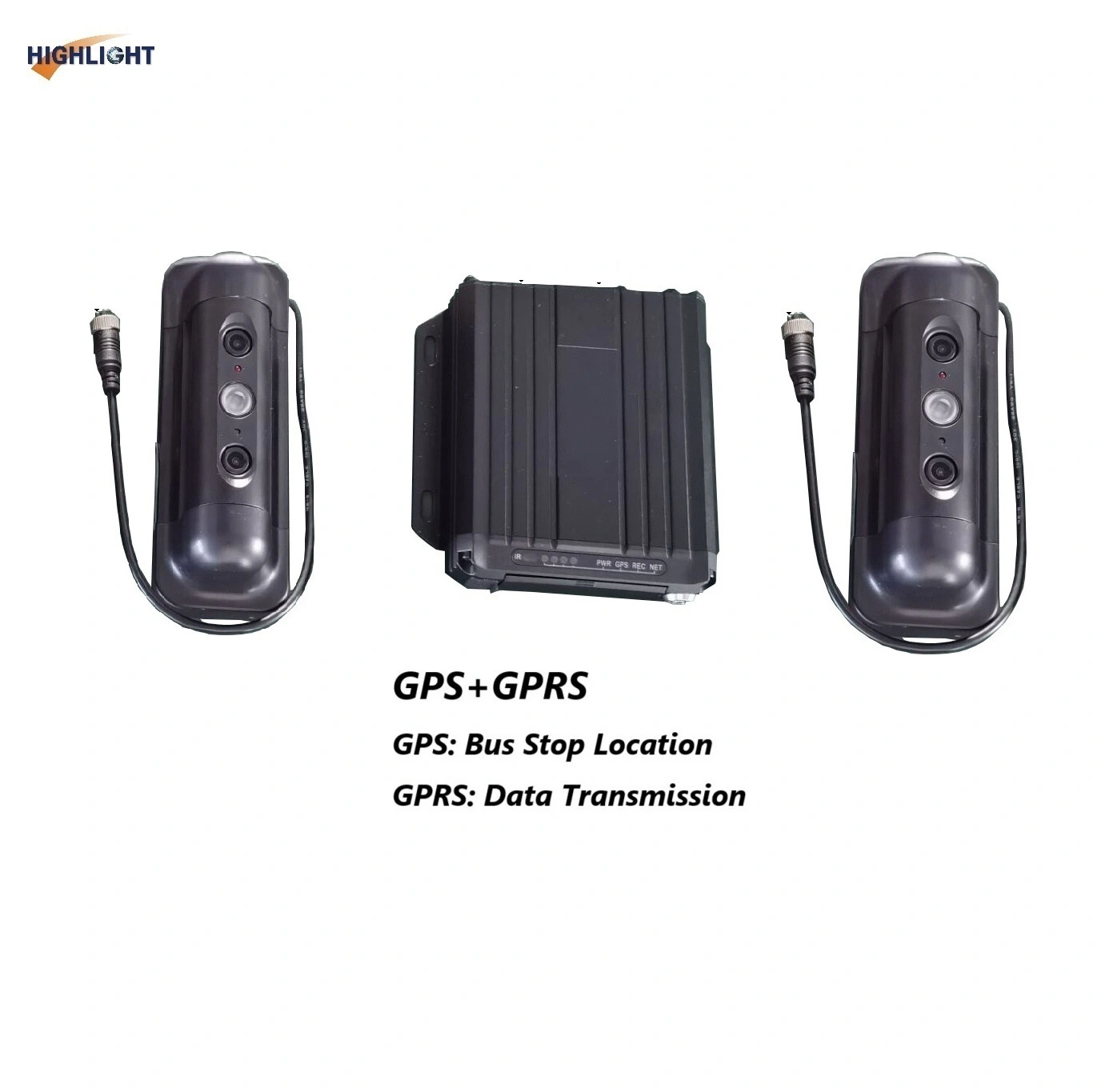
The HPCM002 uses two independent cameras and 3D vision technology to identify passenger movement at vehicle doors. It is designed to record passenger boarding and alighting information and transmit the resulting data through its communication modules.
The product specification lists GPS, GPRS, RS485, RS232 and RJ45 interfaces, making it suitable for transportation projects requiring passenger statistics and data integration.
| Parameter | HPCM002 Product Specification |
|---|---|
| Counting Technology | 3D binocular vision |
| Listed Accuracy | 98% |
| Power Supply | DC 9–36V |
| Power Consumption | 3.6W |
| Communication Interfaces | RS485, RS232, RJ45 and video output |
| Working Temperature | -35°C to 70°C |
| Camera Installation Height | 1.9–2.4m |
| Location and Transmission | GPS and GPRS modules |
HPCM588 AI Passenger Counter
The HPCM588 is an AI-based passenger counting system developed for buses. It consists of a controller and AI passenger counting cameras installed above vehicle doors.
The camera captures passenger movement from above, while the controller processes the images using neural network-based deep learning algorithms. Door-opening and door-closing signals can trigger the counting process, and the system supports GPS and 4G data transmission.
How Passenger Flow Data Supports Transport Operations
Passenger boarding and alighting statistics can be organized by vehicle, door, route, station and reporting period, depending on the selected system and data platform.
- Identify stations with higher passenger boarding and alighting volumes.
- Compare passenger flow across different routes and time periods.
- Support bus scheduling and route planning with recorded passenger statistics.
- Review passenger counts against vehicle operating and ticketing records.
- Integrate passenger data into transportation management platforms through supported communication interfaces.
People Counter – Frequently Asked Questions
Practical answers to common questions about people counter selection, retail installation, passenger counting, system integration and bulk purchasing.
1. Should a retailer choose an infrared people counter or a camera-based people counting system for a new store?
The choice depends on the entrance layout and the level of visitor information required. An infrared people counter uses a transmitter and receiver to detect people passing through a defined entrance. It is suitable when straightforward directional counting is the main objective. A camera-based people counter, such as our HPC008, uses overhead image analysis and can provide additional information such as in/out/stay statistics and visitor-flow reports. If the store requires occupancy information, floor-level traffic analysis or integration with POS/ERP data, the camera-based option may be more appropriate. Entrance dimensions and installation height should be checked before confirming the model.
2. Is the HPC008 people counting camera suitable for a retail entrance with a width of approximately 2 meters?
Yes. The HPC008 is described in our product documentation as a 2D people counting camera suitable for an approximately 2-meter-wide entrance. It is installed overhead and supports bidirectional counting, Wi-Fi and Ethernet connectivity. Before installation, check the ceiling height, mounting position and actual passage configuration. If the entrance includes multiple lanes, large obstructions or unusual ceiling geometry, the coverage should be evaluated rather than assuming that one device will cover the entire area.
3. How can a retail chain manage people counting data from multiple store locations?
A multi-store deployment should use a consistent device configuration and data management arrangement. Our people counting product range includes network-based solutions for chain stores. For HPC008 deployments, counting information can be uploaded to a server and accessed for branch-level reporting. When planning a rollout, retailers should confirm device identification, store and entrance mapping, reporting time zones, network connectivity and user permissions. These details help headquarters compare visitor activity between branches without mixing records from different entrances or locations.
4. Can a people counter operate in a store without a continuous internet connection?
The available operating and data collection methods depend on the selected model. Our product range includes solutions for non-network and network environments. For example, the HPC015U infrared people counter supports local data checking through its LCD screen and USB data export. The HPC008 camera, in contrast, is designed with Wi-Fi and Ethernet connectivity for server-based data uploads. Buyers who operate in locations with limited connectivity should confirm whether local storage, offline reporting and later data export are supported by the exact model before purchasing.
5. Can a retail people counter measure how long visitors stay inside a store?
Some camera-based people counting systems support residence-time or dwell-time statistics in addition to entry and exit counts. Our HPC008 product information lists average residence time and in/out/stay data among its supported counting information. However, the meaning and accuracy of dwell-time reports depend on the monitored area, tracking method and software configuration. Buyers should distinguish entrance counting from detailed in-store movement analysis, because the two applications may require different camera coverage and analytics capabilities.
6. How can a people counting camera integrate with an existing POS or ERP system?
Integration normally involves retrieving counting records through a supported API or communication protocol and mapping the data to the corresponding store, entrance and reporting period. Our HPC008 provides API integration options for POS/ERP systems. Customers can use our software and retrieve data through the provided API, or refer to the device communication protocol to develop their own integration. Before implementation, technical teams should confirm the data fields, access method, timestamps, network configuration and the way visitor records will be matched with sales transactions. The exact integration method should be verified against the selected device and software version.
7. What should an importer check before ordering people counters for entrances with different widths and ceiling heights?
The most important factors are entrance width, ceiling height, mounting position, traffic direction and the required counting technology. Infrared beam counters and overhead cameras have different installation arrangements, so one model should not automatically be used for every entrance. For example, the HPC008 is specified for approximately 2-meter-wide entrances, while different camera models are available for different mounting heights. For a multi-site project, organize entrance measurements and installation drawings by location before finalizing the model selection. This reduces the risk of inadequate detection coverage and unnecessary equipment replacement.
8. Which passenger counter is suitable for buses that need separate boarding and alighting statistics at each door?
A dedicated vehicle passenger counting system is more suitable than a standard retail entrance counter. Our HPCM002 uses two independent cameras and 3D vision technology to identify passenger movement at vehicle doors. The HPCM588 AI passenger counter uses a controller and AI cameras to process boarding and alighting images, with door status signals used to trigger counting. The selection should consider the number of vehicle doors, installation height, controller configuration, data transmission requirements and the transport operator's reporting platform.
9. What communication interfaces should a transport operator check when purchasing a 3D bus passenger counter?
Communication compatibility should be confirmed before ordering, especially when passenger data must be transmitted to an existing transport management platform. Our HPCM002 documentation lists RS485, RS232, RJ45 and video output interfaces, together with GPS and GPRS modules. The HPCM588 uses a different controller configuration with interfaces including RS485, RS232, CAN and RJ45, as well as built-in GPS and 4G communication. These are model-specific configurations. Buyers should confirm the required protocol, data format, network module and integration method with the selected model rather than assuming that all passenger counters use identical interfaces.
10. How should distributors and system integrators evaluate people counter quality before placing a bulk order?
A proper evaluation should cover more than the product's appearance or advertised accuracy. Check the counting technology, sensor or camera configuration, supported entrance dimensions, power requirements, communication interfaces, software compatibility and installation instructions. Where possible, test a sample under representative operating conditions and compare its results with manual counts during both busy and quiet periods. For bulk orders, confirm model consistency, packaging, firmware or software versions, accessory lists and the documentation required by the installation team. We provide different people counting products for retail and transportation applications, and the correct model should be selected according to the actual deployment requirements.
Looking for a People Counting Solution for Your Business?
We provide infrared people counters, 2D and 3D counting cameras, AI people counters and passenger counting systems for different commercial and transportation applications.
Explore Our People Counting Products
Explore the related product categories and individual models to find a suitable people counting solution for your retail or public transportation project.
